by Pixel Kicks
Uncategorised
26th September, 2023

by Pixel Kicks
Uncategorised
26th September, 2023
Designing a striking stand is crucial for businesses looking to make a lasting impression and generate new leads at trade shows and exhibitions. An appealing and strategically designed exhibition stand can attract potential customers, convey brand messaging effectively and help businesses stand out from the competition. In this comprehensive guide, we’ll explore the key steps involved in designing an exhibition stand that captivates and resonates with your target audience.
Before embarking on designing an exhibition stand, it is essential to clearly define your objectives for the trade show or exhibition. Whether you aim to generate new leads, increase brand exposure, showcase new products/services or strengthen existing customer relationships, knowing your goals will shape your overall stand design strategy.
Talk with your sales and marketing teams to get an idea of what pushes and promotions you have coming up, as you can incorporate such themes and goals into your design. There’s no one size fits all concept in exhibition stands – just certain standards that are known to work, plus a smattering of imagination and making sure stands fit in a given space.
Understanding your target audience is paramount in ensuring that your exhibition stand design effectively appeals to and engages the right people. Conduct market research to identify the demographics, preferences and needs of your target audience, enabling you to tailor your stand design accordingly.
Keep an eye on the kinds of things that are going on in your industry, with particular regard to how your competition is exhibiting. That way you can ensure you remain within the customer’s expectations in conservative industries, or push the envelope in more progressive and creative sectors.
Establishing a realistic budget and allocating the necessary resources is crucial to designing an exhibition stand. Consider factors such as stand construction, graphics, technology, logistics, marketing collateral and staffing. Careful planning will ensure efficient resource use.
Whether a stand is reusable or for a single major exhibition should also play a part in your budget. A stand that can be used over and over might have a slightly higher initial price, but it will pay for itself every time you re-use it. Sometimes a halfway house solution works – that is, it’s mostly reusable but is modular so you can change the overall footprint and layout to fit in different spaces.
There are various stand types to choose from depending on your objectives, budget, available space and exhibition rules. Explore options such as shell scheme stands, modular stands, custom-built stands and pop-up displays. Assess each type’s pros and cons to select one that best suits your needs.
Developing an engaging stand concept is the cornerstone of attracting visitors and leaving a lasting impression. Consider unique ways to showcase your brand, products or services. Incorporate interactive elements, innovative displays and engaging storytelling techniques to captivate your audience.
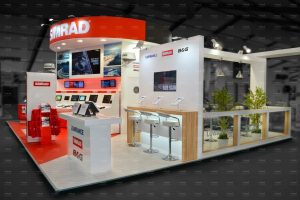
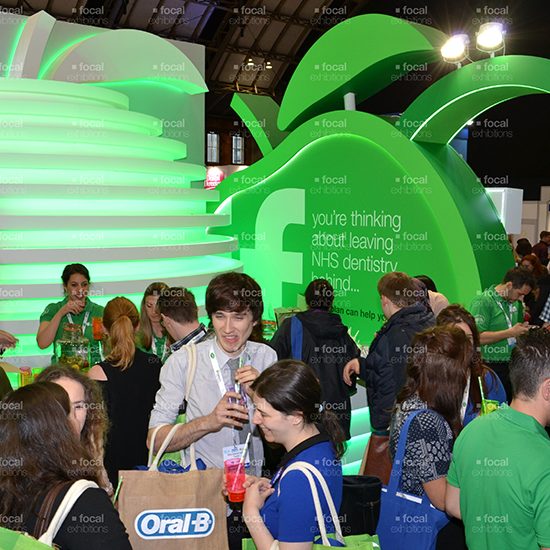
The most important thing to remember is that your stand doesn’t have to be a simple rectangle with an open front. Thanks to modern materials and construction techniques, you can really go to town when it comes to designing a stand that really showcases your brand’s ambition and attitudes. Have a look through our portfolio for inspiration.
Your exhibition stand should be an extension of your brand identity. Ensure brand consistency by using consistent colours, fonts and messaging across your stand design. Your stand should reflect your brand’s values, voice and aesthetics throughout.
This is especially important if you’re handing out flyers or booklets – nothing is more jarring than when the branding of the printed materials doesn’t tally up with that of the stand. Don’t forget that the branding should also extend to the people staffing the stand too. Whether it’s a whole uniform or just a tie, there should be visual cues that link the branding palette with the people visitors are interacting with.
Design your stand in a way that maximises visibility. Use eye-catching visuals, high-quality signage and bold branding elements to attract attention from the other side of the exhibition hall. Use displays and multimedia to showcase your products, emphasising their unique selling points.
You only have a few seconds to grab people as they walk by, so think about what would make a person working in or around your industry stop and take note rather than move on to the next stand. In this respect, think of your stand as having the same qualities as a well written headline or a catchy slogan.
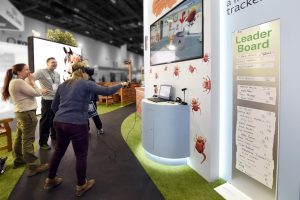
Technology plays a pivotal role in exhibition stand design. Incorporate interactive displays, touchscreens, virtual reality experiences or augmented reality elements to engage visitors. Implementing technology can help convey complex information in an innovative and memorable way, thanks to the way brains process different sensory stimuli. Interactive elements also have a role in attracting passers-by, and gamifying certain elements of your marketing is an opportunity that’s only available in face to face situations – use it.
Strategically designed signage and graphics can communicate essential messages at a glance. Use clear and concise messages that align with your overall stand concept. Ensure that information is easily readable from different angles and distances.
Again, make sure any signage and graphics fit seamlessly with your current marketing strategy. There’s no point in using graphics that are too generic to describe your current goals, or just rehashing last year’s campaigns. Graphics are easily changeable on any style of stand, so allocate some of the budget to keeping them relevant. It also helps to employ professional graphic designers, especially ones with experience in designing for exhibitions.
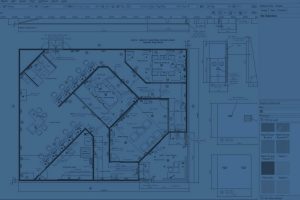
A well-designed layout and flow are critical to optimise visitor movement within your stand. Design a logical flow that guides visitors along a journey and ensures they engage with key areas and information. Allocate appropriate spaces for product demonstrations, discussions, and lead generation. It’s amazing what a difference it can make to the visitor experience, and it helps you to allocate resources, budget and personnel to certain areas to accommodate visitors and maximise your return on investment.
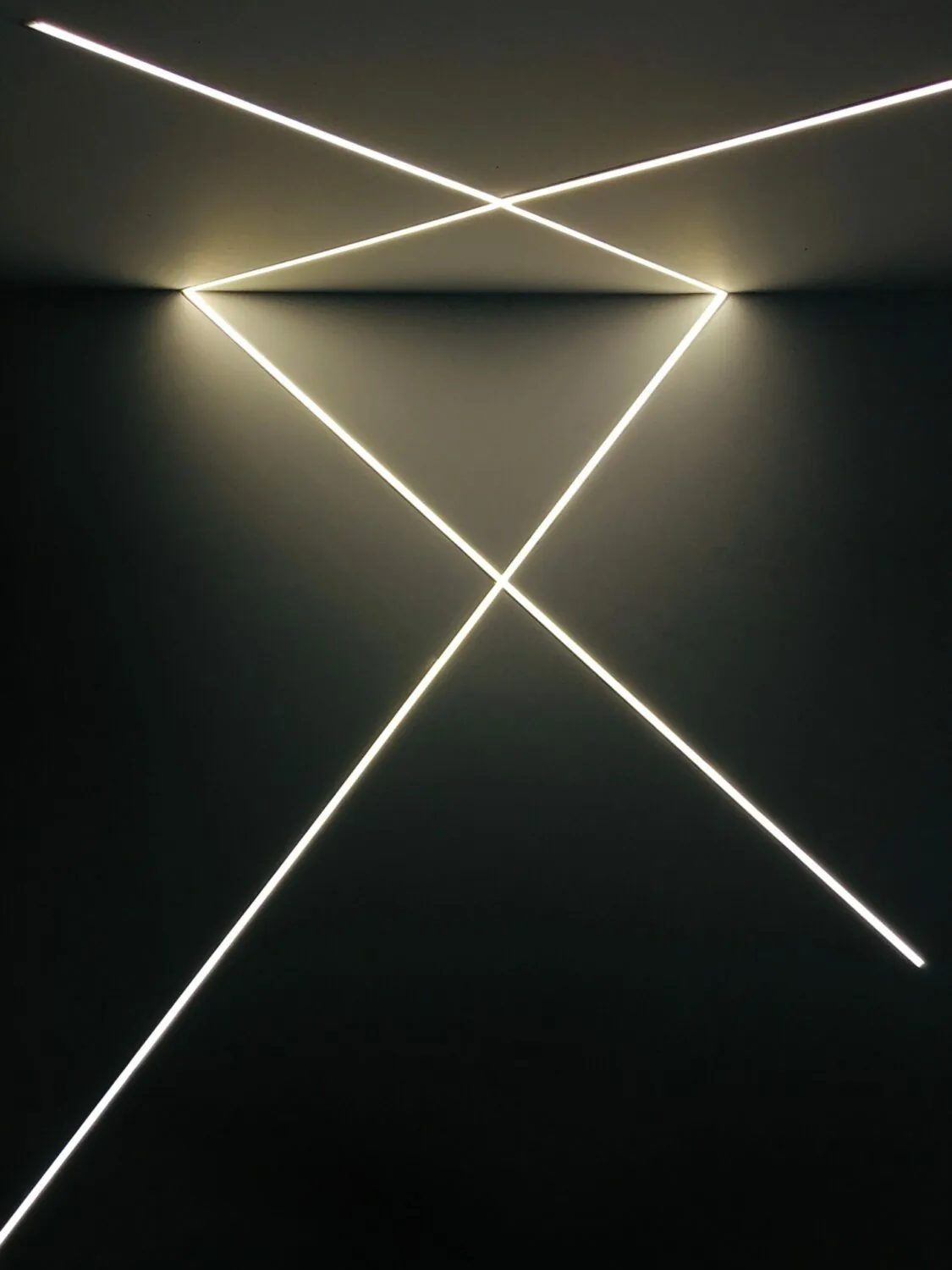
Lighting and colour can significantly impact the overall ambiance and mood of your exhibition stand. Use lighting strategically to highlight key elements and create a warm and inviting atmosphere. Choose colours that align with your brand identity and evoke the desired emotional response from the visitors.
If you’re interested in finding out more about the various options for lighting your exhibition stand, have a look at our article on the subject. It guides you through the pros and cons of all the different types of lighting, including natural light. Of course, a professional stand designer will be all over the lighting situation, but it’s good to know the choices.
Ensure your exhibition stand is practical and functional, taking into account factors such as storage, electricity requirements and visitor comfort. Additionally, embrace sustainable design principles by using eco-friendly materials, energy-efficient lighting, and recycling options. Again, we’ve written about this really important subject – please have a read as it’s a crucial part of your plans.
Working with an experienced stand designer can be instrumental in translating your vision into a reality. Collaborate closely with the designer, communicating your objectives, brand messaging and design preferences. Leverage the designers’ expertise to optimise your stand design.
Thorough planning and preparation before the exhibition are vital. Ensure all logistics, transportation and installation are organised. Train your staff to effectively engage with visitors, provide product information and collect leads. In short, don’t leave anything to chance on the day, and have backup plans for the most likely things to go wrong, such as staff sickness, electrical issues or transport problems.
Why not have an all-encompassing pre-show marketing campaign to generate excitement and attract visitors to your stand? It’s a great way to give your exhibition focus and direction, and helps your own staff just as much as potential visitors.
After the exhibition, review your performance against your defined objectives. Measure success based on lead generation, brand exposure and qualitative feedback from visitors. Gather feedback from both staff and visitors to identify areas for improvement in future exhibitions. Exhibiting is an ongoing process, and you should never get set in your ways. Make sure your staff also have an eye on other stands, especially direct competitors, because you can be sure that they have an eye on yours.
Designing an exhibition stand is a creative and strategic process that requires careful planning, consideration of objectives and collaboration with expert stand designers. Implementing an engaging stand concept, ensuring brand consistency, optimising visibility, and using technology are key aspects of designing an exhibition stand that effectively captivates your target audience.
By following this guide, you can create an impressive exhibition stand that maximises your presence at trade shows and exhibitions, helping your business achieve its marketing objectives. And we’d be delighted to help you on your journey.