Types of exhibition stand wall
Each type of wall serves a different need, and they all have their own budgets and capabilities. You can’t make an informed decision without first knowing how they differ, and what they bring to the party. Let’s go through the most common types of walls, so you know what’s out there.
Shell scheme walls – working with what you’re given
Shell scheme stands are the bread and butter of many UK exhibitions. These venue-provided structures typically consist of aluminium frames with white or grey melamine panels, standing at approximately 2.4 metres high. They’re basically blank canvases provided by exhibition organisers. They’re functional, uniform and ready for you to apply your creative touch.
The beauty of shell schemes is in their simplicity. You’ll receive a pre-built box structure, usually in a 3×3m or a 3×4m configuration, complete with a fascia board displaying your company name. Some exhibitors might view these as limiting, but they can present opportunities if you know in advance what you’re dealing with. Graphics panels that hook over the walls, magnetic fixings, or velcro-backed fabric overlays can transform these basic structures into branded walls without damaging the venue’s property.
The main advantage is lower overall costs, as this basic structure is included in your stand fee, usually along with carpets, basic lighting and a power supply. Standing out from the crowd can be tricky though, as all the units will have essentially the same setup.
Pop-up display walls – portable and quick
Pop-up walls have revolutionised exhibition participation for smaller businesses, especially if you’re attending multiple events. These lightweight, collapsible frameworks expand accordion-style to create curved or straight wall displays, typically ranging from 2 to 6 metres wide.
Some pop-up systems feature magnetic bars that hold graphic panels in place, creating seamless visual displays. The entire system, including graphics, packs into wheeled cases that double as promotional counters or desks, a clever design that maximises every component and means you don’t have to look for somewhere to store the cases.
Pop-up walls offer real convenience for travelling exhibitors. A single person can transport and erect these displays within 15–20 minutes, and one will easily fit in most cars. The downside is that they lack structural integrity that you’d need for mounted products, shelves, heavy displays or screens.
Modular wall systems – flexibility by design
Modular displays offer great versatility through their interconnecting components. These systems use aluminium extrusions, tension fabric frames or panel configurations that can be reconfigured for different stand sizes and layouts.
The main benefit of modular walls is in their adaptability. Say you’re exhibiting at a 6×3m space this month and a 4×4m corner stand next month. The same modular system can be reconfigured to suit both. Components can be added or removed, heights adjusted and graphics updated without replacing the entire structure. And if one section gets damaged, you can simply replace it without having to reconfigure the whole stand.
Modular systems are now available with built-in LED lighting channels, cable management and mounting points for monitors or product displays. While the initial investment certainly exceeds pop-up displays, they are much more versatile and structurally capable, which opens up more display options. They can require a fair amount of storage and transportation space, so you’ll need to factor that into your plans.
Custom-built walls – when you know exactly what you want
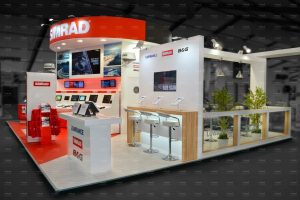
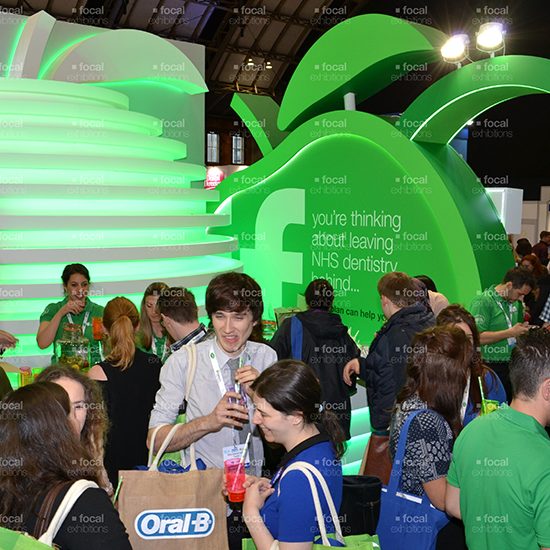
These bespoke structures are designed specifically for your brand, and can incorporate unique shapes and integrated technology that display your company’s messaging. Custom walls can feature sweeping curves, dramatic overhangs or unusual architectural elements – basically, whatever you want, within the realms of physics and budget. They can incorporate reception counters, display plinths and demonstration areas as integral elements rather than add-ons or furniture items. Construction can also use interesting (and sometimes expensive) materials such as wood, metal, glass and specialist materials to create truly distinctive environments.
The investment in custom walls extends beyond the construction cost itself. Design, structural engineering, branding and planning time all factor into the equation. Transport requires more specialist logistics, as some elements might not be fully collapsible, and installation sometimes needs several fully-trained crew members.
If exhibitions are an important part of your marketing strategy, a bold bespoke stand can make a real difference because they stand out so well at any event. You have to be fully committed to the shape, however. Unlike with modular stands, the final product might have little or no flexibility, so you’ll need to know the venues and spaces inside and out.
Fabric tension walls – sleek and modern
Fabric tension systems have grown in popularity in recent years, partly thanks to their contemporary aesthetic, along with some practical advantages. These systems work by stretching printed fabric across lightweight aluminium frames, creating smooth, wide displays with maximum visual impact.
The fabric itself (typically a polyester blend) can be printed using dye sublimation techniques that produce vibrant, permanent, crease-resistant graphics. Unlike traditional rigid graphics, this fabric can be washed, folded for transport and easily updated by simply swapping the fabric skin while keeping the frame.
Acoustic walls – quiet spaces in busy halls
If you’re expecting to have private conversations or do product demonstrations in noisy exhibition environments, acoustic walls can deaden the external buzz of the exhibition hall. Acoustic exhibition walls typically feature a multi-layer construction, featuring a structural frame filled with sound-absorbing materials like mineral wool or acoustic foam, covered with perforated panels or acoustic fabric.
Some modular systems now have acoustic panels that can be inserted where needed, allowing you to create quiet zones within larger stands without committing to fully acoustic construction. It’s important to note that you’ll never be able to achieve complete soundproofing, as no portable walls will be thick or heavy enough, and you would also need a soundproofed ceiling. However, they can significantly reduce background noise, even if they are only used on three sides of a four-sided stand.
Display walls – motion and engagement
Integrating screen display and projection walls can turn a static exhibition stand into a dynamic, engaging space. These digital solutions bring motion, interactivity and flexibility that traditional printed graphics cannot hope to match, offering you some powerful tools to capture and maintain attention in bustling exhibition halls.
LED video walls are the gold standard for high-impact digital displays. These modular screen systems can be configured to virtually any size or shape, from small panels to spectacular floor-to-ceiling installations. They work well in all lighting conditions, but can be expensive, especially when they’re large.
A more budget-conscious digital solution is the LCD display wall. By combining multiple screens with narrow bezels, these systems create near-seamless digital canvases with high resolution. Content can span across multiple screens or display different messages on each panel, providing flexibility for product demonstrations, social media feeds or brand messages.
Projection mapping is an innovative approach, transforming ordinary flat or curved walls into dynamic displays that don’t need any special structural backing. Modern laser projectors offer long lifespans and maintain colour accuracy throughout multi-day events.
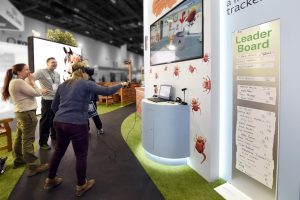
The real power of display walls lies in their interactive capabilities. Touch-sensitive overlays can transform video walls into giant tablets, allowing visitors to examine products, explore virtual spaces, or just play games. Motion sensors can trigger content changes as visitors approach, and gesture control systems enable touchless interaction – useful for lighter walls.
Just make sure your venue can supply enough power for these walls. LED walls in particular can consume quite a lot of electricity, and they can pump out a fair amount of heat, too. You’ll also need to consider transportation, and your installers will need to know how to set them up and troubleshoot them. A single faulty panel on a 16-screen display can ruin the whole effect.
Partition walls – dividing your stand
While most walls in an exhibition stand are situated around the outer perimeter of the space, there could be occasions when you want to separate the space into two or more sub-sections. For example, you might be promoting two different products and want a clear delineation between them. Or perhaps you want one area to talk business with clients, and another for demonstrating. This is where free-standing partition walls can save the day.
Obviously, a wall won’t stand up on its own unless there’s something to stop it succumbing to gravity. A simple design is the concertina design, where the zigzag (or just a V-shape) arrangement gives it some stability. This can be easily put up and folded back down if you need the whole space. Similarly, a large panel with two angled end-panels will provide enough stability to stay upright.
A single large panel with feet is also an option, although the feet can be trip hazards if they’re not clearly marked. Alternatively, panels attached to tables or other furniture can separate the space safely. All of these panels can be printed or used to hang light graphics from, so they don’t have to be a branding-free zone.
Transparent walls – maximum visibility
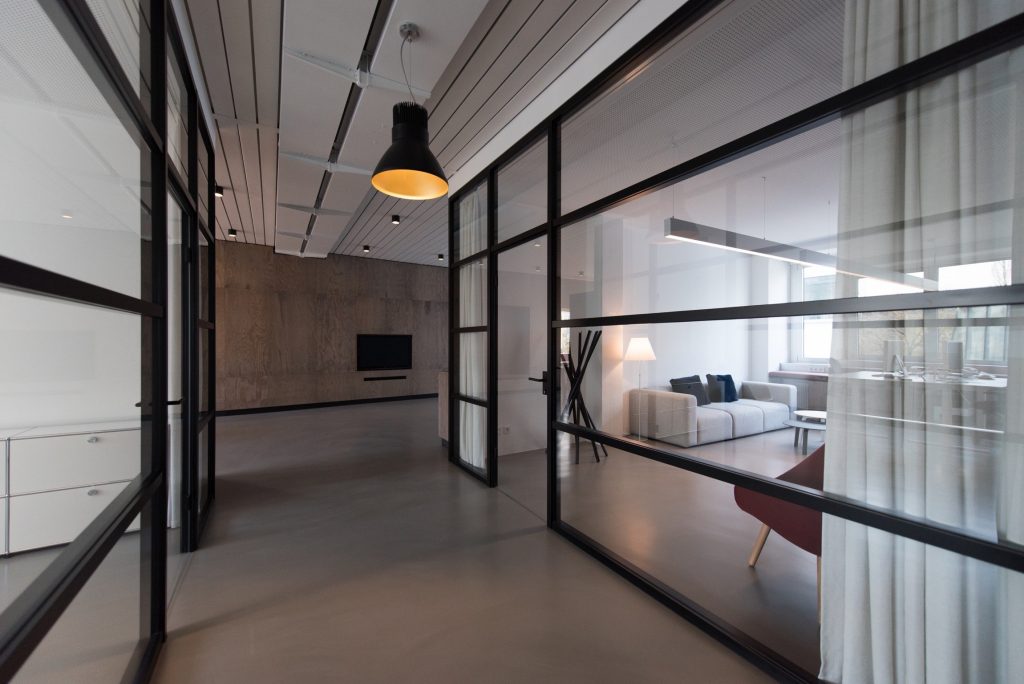
An often overlooked type of wall is one made of glass or a plastic alternative. These come with a number of benefits. First, there’s the amount of light flowing into the stand. For outdoor exhibitions or indoor ones with plenty of natural light, that’s even better, as natural light can be a more flattering way to display products, and it can have a calming effect.
Another benefit is that people passing by can see into your stand and look at what’s going on. That can be great if you’ve got interactive displays or some other kind of highly visual demonstration going on, as it can attract more visits. Glass works both ways, of course, and you can see what’s going on outside – transparent walls can really make you feel like you’re part of the event, with people milling around outside.
And let’s not forget that transparent walls can simply look fantastic, too. They don’t have to be completely clear, of course. They can have a tint or graded shaded between colours, or gradually go from transparent to opaque. It’s one way to make yourself stand out from the crowd. Adding some graphics to the sheets can take the look into a whole other dimension too, combining the draw of transparency and the marketing messages covered above. There’s also a safety element, too. Some subtle graphics can stop people accidentally walking into them, which is bound to happen eventually.
Translucent walls – light with privacy
Between transparent and opaque is translucent, which is where light can get through, but it’s diffused so nothing of detail can be seen on the other side. However, there are degrees of translucency. A mild covering of translucent material can retain some interesting motion on the wall, made by people moving, and the different light sources and shadows will give a “living wall” effect. A thicker covering will allow light through but you won’t see much detail or motion outside.
Common pitfalls to avoid
There are some common errors that do crop up with walls, which deserve a cautionary mention:
- Underestimating setup time and complexity. It’s always worth practising setting up and breaking down your walls away from the venue, partly to estimate how long it’ll take, and also to identify any complexities that you might have overlooked.
- Ignoring venue regulations until too late. Long before you build your stand, make sure you know of any rules or specifications that the venue has, be that size restrictions, lighting or power consumption.
- Poor quality graphics that pixelate at scale. Visitors will be standing quite close to your walls, so while they might look great from across the hall, if they look blurry or blocky close up, it can look cheap and confusing.
- Inadequate structural support. Heavier materials need architectural levels of support, so make sure walls can stand up on their own, and carry any extra weight from things like screens, pictures or shelving. Your exhibition stand designer will be able to advise here.
- Not planning for damage and quick repairs. Finally, accidents happen, and you should have a plan for what to do if part of your wall gets damaged. Modular setups are great for this, as you can take a few spare panels, but taking some light, temporary walls (such as pop-up displays) that can hide a damaged section might come in useful.