The planning stage: a year in advance of event
If you want to make sure your exhibition stand represents a worthwhile return on your investment, a certain amount of decision-making needs to happen. The first, and perhaps most important, question you should ask yourself is: “Do I need an exhibition stand?” The answer will come from your long- and medium-term marketing strategies, and there’s a chance that it will become evident that right now, it wouldn’t necessarily be a good investment. For example, if you already have an optimum market share and you can’t see much opportunity for new inroads, exhibiting might not make immediate financial sense.
On the other hand, if you’re launching new products or services, entering new regions or sectors, or simply reinventing your brand, then exhibitions can be a lucrative way to make connections and raise awareness of your offering, or simply your name. Exhibiting can be reasonably expensive, especially for smaller businesses with lower margins, and there’s a threshold at which it becomes viable. That’s why it pays to get your marketing, sales, PR, product development and operations teams involved in the decision, and to keep them involved as the project progresses.
Another decision to make concerns the trade shows you intend to exhibit at. In every industry, there’s a selection of shows that are must-go ones for insiders, where the top decision-makers, buyers and suppliers will be in attendance. But there are also niche exhibitions, which might be more appropriate to your offering, and regional shows that are useful if you’re targeting a geographical area. These can be less expensive than the large events, but they might turn out to be more focused on your current goals, so could prove to bring in a better RoI than the major ones. Knowing which shows you’ll be aiming for will also influence the type, size and nature of your stand.
The design phase: 9–6 months in advance
Once you’ve decided that your organisation would benefit from an exhibition stand, and you have come up with a budget, the next important phase is to start the design itself. There are essentially two flavours of stand: modular and custom.
With a modular stand, you buy a certain number of modules or sections, and they fit together with a degree of flexibility. That means you can make different layouts depending on the size of your space and, for example, whether it is in a corner, along an edge or in an island plot with 360 degree access.
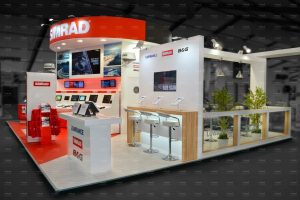
Custom stands are designed from the ground up, and have a single layout that cannot easily be modified from event to event. They are great when you have a real identity and want to make a splash in an exhibition, or if you have specific needs, such as a place where visitors can try out your products. You might also want to have a stand with an upstairs space, which has its own structural challenges. The drawback of custom stands is that you are tied to that layout, which could be too big for certain spaces. That said, you can combine a custom core with modular sections, which can give you some flexibility.
If you need help with this initial decision, take a look around our News section, as it’s full of valuable advice about the kinds of decisions that will influence the nature of your stand. Some relevant topics include:
And of course, if you want a one-to-one consultation with exhibition stand experts, please get in touch with us – we’d be delighted to help. We can arrange a consultation that will give you advice on planning and designing your stand, and then we can build it for you. It all depends how hands-on you want to be, but we love bouncing ideas off creative people who are passionate about their businesses.
You might choose to brief a stand designer and let them deal with the shape and look of the stand, and that’s a great way to get expert assistance from someone who works in the industry. It’s a good idea to know exactly what you want from your stand before you brief them, however. Let them know what kinds of exhibitions you intend to attend, what the purpose of your stand is (meeting clients, product demonstrations, brand awareness etc.), and what your budget is, both for the build itself and its ongoing costs.
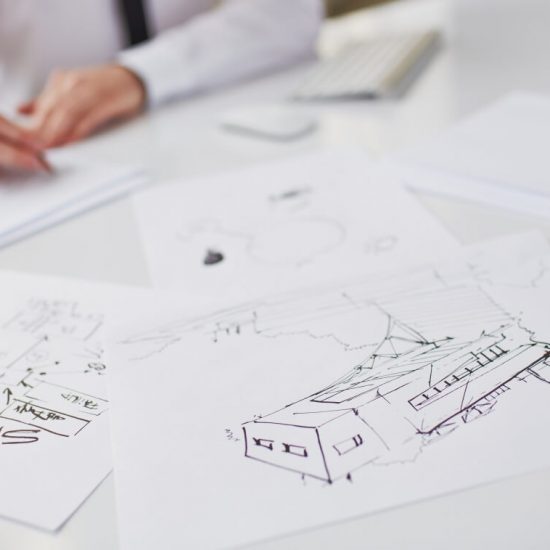
A good designer will keep you involved with the process, so you can ensure it’s sticking to your goals. They will be able to provide you with CAD drawings and perhaps tangible mockups, so you can get a better idea of the concept, and make any adjustments. They’ll also know about the materials that can be used within your budget and style constraints, what they are capable of and how much they’ll cost. They will also understand all about technology integration and power and lighting specifications. This is specialist knowledge that most laypeople simply don’t have to hand.
Once you’ve approved the designs and technical specifications, you can sign it off and hand it over to the manufacturers.
Exhibition stand construction: to start 3–6 months in advance
While modular stands can usually be purchased direct from the warehouse or supplier, it’s always a good idea to make sure the type, size and amount are available well before you plan to exhibit. Not only will that ensure you have all the parts you need, but it’ll also give you a chance to practice assembling and disassembling it, and trying out a few layouts.
For custom stands, the amount of time your constructor will need will vary depending on how complex it is, the availability of materials and what integration is needed for technology, lighting and power, as well as any structural specifications such as load-bearing capacity of walls or columns. That’s why it is useful to keep your intended fabricator in the loop throughout the conceptualisation and design phases. You will also need to book manufacturing time well ahead of the start date, as they are probably already working around the clock to get customers’ stands out on time.
Your contract with the fabricator will detail exactly what you and they will supply, and what tasks will be performed. For example, they might be responsible for the engineering and construction of the main frame, while you supply walls, graphics, screens, flooring and lighting. Alternatively, the manufacturer could be contracted to supply everything. In practice, there’s usually a blend of responsibilities that is shared between both parties, so make sure you know exactly what you’ll need to supply yourself.
The fabricator will let you know when it’s finished, so you can go to the workshop and see how it looks. You might be able to make a few minor modifications, although there could be a fee if it strays beyond the tolerances set out in the brief and the contract. They will also let you know how to assemble the stand and to take it down and pack it away. This is, of course, vital knowledge, so make sure you’re paying attention! Once it has been delivered, we would always advise you to do a few practice run-throughs of the assembly and disassembly processes with the team. It’s better to iron out any complications now than a few hours before the exhibition starts.
Logistics and storage planning: 1–3 months ahead
In all the excitement and anticipation of the event, it’s easy to overlook how you’ll actually transport your stand to the exhibition, and where it will be kept before and after it. But logistics and storage are every bit as important as the stand itself, for safety, security, easy access, convenience and cost reasons.
The way the stand is stored and transported depends on its size, weight and complexity, as well as how much its components can be collapsed. Some simpler stands can fit comfortably into the back of an estate car, while bigger ones, or those with heavier materials, are more likely to need a van of some sort. You’ll also need to take into account the amount of manpower that will be required to load and unload it, as cases can sometimes be quite heavy. Training in carrying the stand should be given where appropriate. If your business doesn’t own a vehicle, make sure you book your van hire well ahead of the event to ensure you’ve got one when you need it.
If you’re taking your stand overseas, that’s a whole other layer of logistics and paperwork to take into consideration. Make sure that’s all sorted well in advance of the event, as it can stop you dead in your tracks if it’s not all sorted at the port. Even if you’re transporting within your region, it pays to properly plan your route, taking peak times and rest breaks into account.
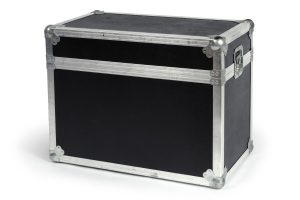
Storage is another factor that can be overlooked if you’re not careful. Even though stands fold down and collapse to a fraction of their erected volume, they can still require several large carrying cases, especially when you take into account specialist flooring, displays, technology and furniture. Your constructor will be able to tell you how large the stand will be when it’s deconstructed, so if you don’t have enough room at your work premises, you might have to use a storage company – so make sure those costs are factored into your budget.
As storage and logistics are inherent parts of the ownership cost of your exhibition stand, they should also be taken into consideration when you’re calculating your return on investment and budget. Also make sure you include costs like insurance, ongoing repairs and maintenance, as these are vital.
Once you know where you will be exhibiting, make sure you have studied the venue’s instructions and specifications. You’ll need to know where to park (when loading and during the event), and when you need to arrive and leave, as well as things like power supply locations and networking. There will be people on hand at the venue, but they are always in demand, so the more you know ahead of time, the better.
The exhibition: zero hour
After all the planning, construction and logistics, the day finally comes for the exhibition itself. It can certainly be overwhelming the first few times, but soon enough your team will become more relaxed and will know how to get the best out of every encounter. You can help yourself to hit the ground running by role-playing meetings with your team, and making sure there’s a chain of command for important decisions.
Make sure staff understand the products and services fully, and that they are trained on all the technology and demonstrations you’ll be using. This takes as long as it takes – nobody knows your team better than you do – but involving sales, marketing and product development teams in the training always pays dividends.
Get yourself a stand to be proud of
Exhibitions are incredible places to raise awareness of your brand and your products to your potential customers. But it’s a competitive world out there, and you need to make sure you grab guests’ attention so they stop by and start talking. If you’re looking for inspiration for your stand, check out our portfolio, and drop us a line when you’re ready to get started.
The most important piece of advice, however, is not to leave it too late. Planning for your event takes time, and with the benefits of a successful event being so potentially lucrative, you can’t over-plan these things.