So far, so “Marketing 101”. But for a lot of businesses, “marketing” means placing ads in publications or online, buying billboard space or TV ad slots, and engaging in things like email marketing and social media. These are all tried and trusted methods, but they can be rather passive. They rely on potential customers first seeing them, then engaging with them, and finally acting upon them.
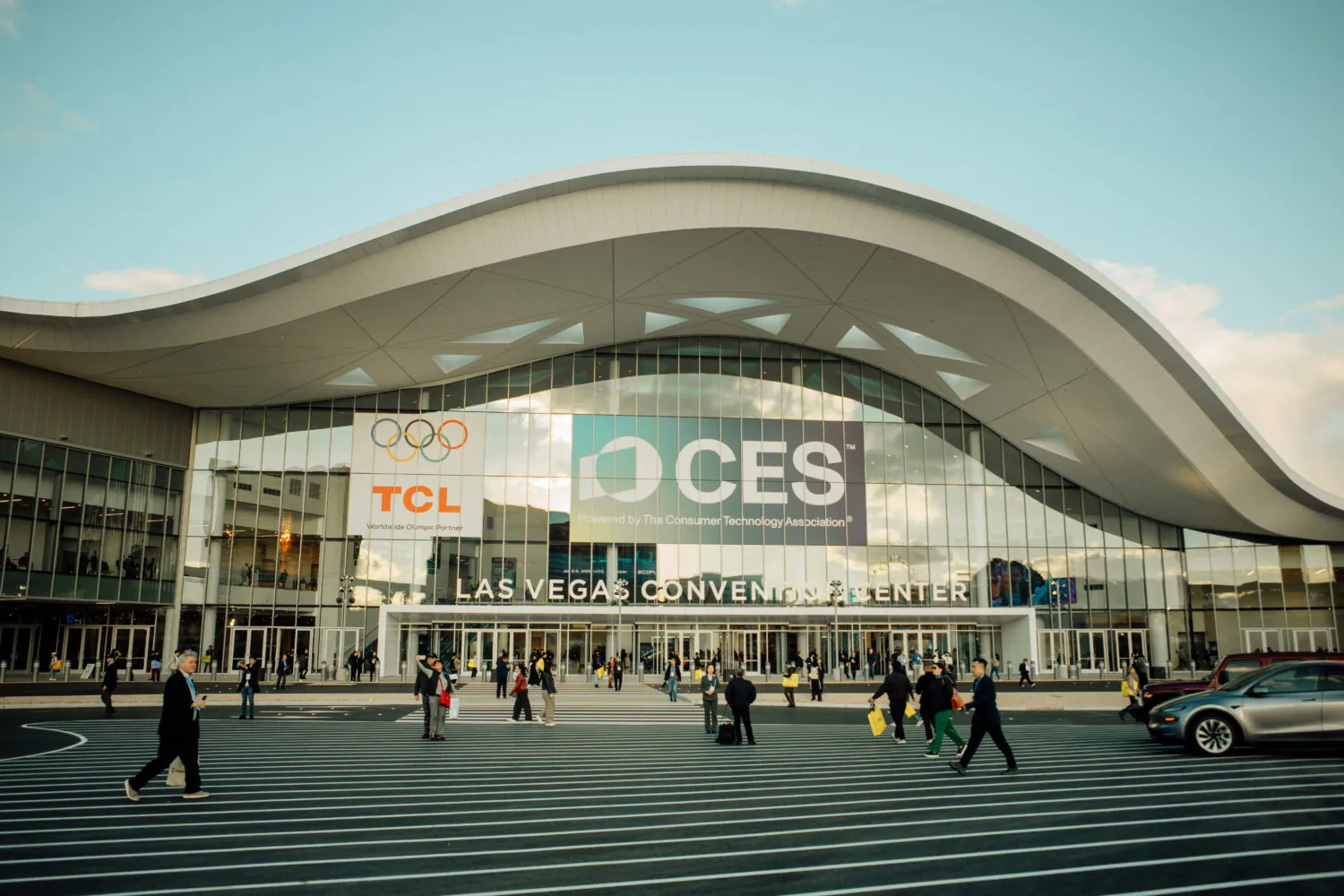
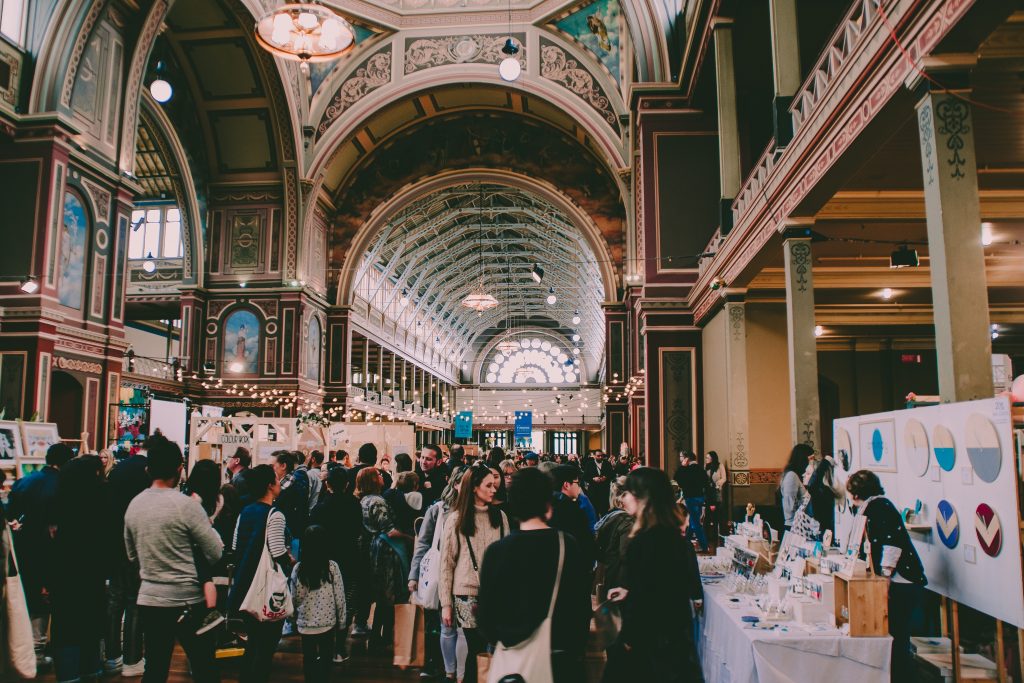
In many sectors, especially when B2B marketing is prominent, being an enthusiastic player in the exhibition and conference space is a type of marketing that can bring incredible returns on what is a relatively small investment. Because they exist in the real, three-dimensional world, exhibitions have a vividness and immediacy that no other form of promotion can achieve. After all, exhibitors get to meet potential leads face to face, take questions, give advice, and perform demonstrations, among other benefits.
In this piece, we’ll go into more detail about why getting in the exhibition space can greatly improve your standing in your field, and why having your own exhibition stand should be part of that calculation.
Direct return on investment through lead generation
The main reason why exhibiting is a key part of many B2B companies’ marketing mix is its face-to-face nature. It’s a cross between a sales meeting, a product demonstration and a promotional push, all in one space.
There’s simply something more trustworthy about meeting a fellow human being and having an actual interaction, compared to seeing yet another online advert or interacting with faceless emails. It lets ideas bounce between the parties, and encourages questions and answers that many a marketing campaign would completely overlook. Different businesses have different needs, and your marketing might focus on the seemingly most profitable aspects of your offering, while ignoring some niche needs that being in the room with someone can unearth.
Add to that the fact that exhibitions are, by their nature, self-selecting when it comes to attendees. Every single person there either belongs to the sector or is a client or supplier of the sector. For that reason alone, you can be sure that every lead you make will be a high quality one. The fact that they are in attendance at all shows that they are already interested in sourcing solutions for their business needs, and you could be the key that unlocks it. In short, you are meeting potential leads at a narrower part of the sales funnel than you could ever dream of with other means of sales and marketing.
For that reason, most businesses who take exhibitions seriously report healthy conversion rates from the interactions they make in the hall. These might not happen the next day, or even the next month, but once the seeds of engagement are planted, they can germinate at any point in the future when your offering ticks the boxes of a potential customer’s needs.
In certain sectors, it’s even better – the exhibition space can prove to be a direct source of sales, there and then. Companies often send their key decision-makers to these events, and if they’re impressed with your offering and they have an immediate need, contracts can be signed straight away for significant sums of money. Those very contracts could end up in your competitors’ filing cabinets if you snub the event.
Brand visibility and market positioning
A physical presence at an exhibition can enhance your profile in the eyes of potential leads. You might have a smaller stand than the major players in your sector, but it doesn’t matter because you are there in the room alongside them. That counts for something, and you can benefit simply from the association you form in people’s minds.
Ultimately, if your stand is designed well and staffed with enthusiastic, knowledgeable people, it can have a much bigger impact than a similarly sized stand that’s a little uninspiring and half-hearted. Keeping on top of trends in the exhibition space, and ensuring you’re using technology to your advantage, are multipliers when it comes to visibility and positioning.
Because you can activate all the senses – sight, sound, touch, smell and taste – you’re already at an advantage over businesses who stick to a digital-only or print-only marketing strategy for their B2B efforts. Imagine if you’re in the hospitality sector, for instance, and you can give out samples of food or drink to those who visit your stand. Straight away, you’re working on those senses that create memories that guests will associate with you. That can only be achieved face to face.
Geography is another important factor in exhibiting. You can insert yourself into very specific regions or cities that you’re targeting, and straight away that gives a “local” feel to visitors, who will tend to be predominantly from that area.
Relationship building and networking
Networking is a fantastic and efficient way of building and maintaining relationships with clients and potential leads. There are countless channels and methods for successful networking, but attending exhibitions is a powerful one. It comes with all the immediacy, personal connections and appeal to the senses that we mentioned above.
Exhibitions are when people are particularly switched on and tuned into a deal-making mindset. They could be reporting back to base when they return, or they could be looking to sign up partners, suppliers or clients there and then. Either way, the more quality leads you can create, the better – and as we mentioned above, there’s nowhere better to find them than in one of the key events that the industry hosts.
Trust is always important in business – in fact, it’s one of your most valuable intangible assets. The way people view your business directly influences revenue, growth and your ability to attract top talent. Once again, the exhibition space proves itself to be an important factor. Those in-person interactions communicate much more than raw data about your respective offerings, needs and desires. The human touch adds a layer of credibility that is impossible to match in any other format. And while it might be hard to get your foot in the boardroom door of a major player to showcase your wares, in the exhibition hall they are all but guaranteed to come across your stand, and that’s when you can work your magic.
Product demonstration and customer education
If you are selling a product, or even some services, a first-hand, real-life demonstration is worth an estimated 6,000 words in a brochure (or six pictures). OK, we made that figure up, but you get the idea.
Letting people try your products for themselves, and seeing how much better, quicker, cleaner or more cost-effective it is, is simply a great way of selling. In the exhibition hall, with hundreds of people who understand the economics and the practicalities of the pain point you are addressing, you’re in the best possible place to show your products off.
It works both ways, too. People trying out your products will also ask questions, and those questions are gold dust when it comes to research and development, sales pitches and advertising. Even if people go away unenthused by your offering, that too is incredibly valuable information that can be used to make improvements, or even abandon a project altogether and cut your losses.
Hands-on tryouts and demos are also great for putting people’s misgivings to bed and educating them about what your product can do. They might have approached your product with scepticism, but your display and your interactions might actually change their minds.
Finally, exhibitions are also a great place to gather intelligence and educate yourself. Your competitors will be showing off their latest innovations (perhaps with their cards close to their chests), and it’s a great way for you to get talking to people behind the businesses. It can give you a wake-up call if you’re falling behind a little – or reassure you that you’re still in the game. Either way, it’s an opportunity that is difficult to equal outside of the buzz of the exhibition venue. Of course, you don’t need to be an exhibitor to gather intel, but if you’re going anyway, why not set up a stand?
Stand value and reusability
An often overlooked factor when pricing up exhibition stands is that they are fully collapsible and reusable. That investment isn’t just for one exhibition – it can be used time and time again. Each reuse divides the investment by an extra one, while adding to the return potential each time.
It does, however, make sense to have an ongoing budget to make minor upgrades, modernisations, adjustments and repairs to your stand. Experience will teach you which setups work and which don’t – and because it’s unique to you, only experience will do. Don’t forget that elements do get damaged or start looking a little tired, so it’s better to replace them than to let that be customers’ first impression of you. This ongoing spend will only be a steady drip compared to the initial outlay, and there are some clever ways to prolong the life of your stand, too.
One way to maximise adaptability is to go modular. That is where you have a stand that’s made up of a number of sections that can be connected together in different ways. So whether you’re in an L-shaped corner area, a mid-row slot or a central island with 360-degree access, you can design a stand that will fit the space.
Maximising your exhibition investment
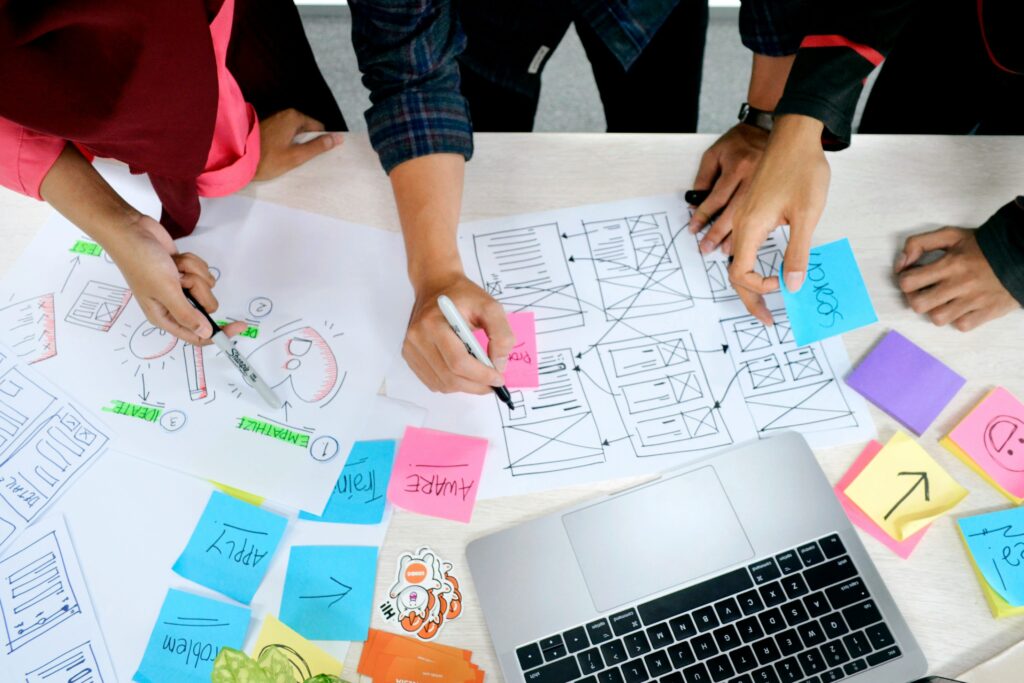
We’ve covered multiple reasons why your exhibition stand can be a sound business investment. But there is a degree of planning and decision-making that should go into the design, creation, storage and application of your stand.
The most important factor is to be selective with the exhibitions you decide to show at. It might seem like a no-brainer, but it’s quite easy to go to a lot of time and expense to exhibit at an industry event that’s only tangentially connected to your own sector.
Of course, there are certain industries that cross multiple sectors, such as accounting software, office servicing, logistics and so on. But it still pays to be selective about the ones you book spaces at, and what kind of size and location you should be looking for. It all comes down to return on investment, and your goal should always be to have every event pay for itself in sales, leads or awareness-raising.
If you do serve multiple sectors, perhaps it would be a good idea to focus on one sector for a season, then move onto another. There will always be needs that are unique to any given sector, and if you’re set up to deal with them specifically, it’s a more efficient way to exhibit.
Don’t scrimp on staff training, either. The face-to-face meetings with these people constitute the single most important reason for exhibiting, so make sure you get the most out of every encounter by training staff with scripts, educating them fully on your products, and letting them know who to talk to if a visitor looks like turning into a promising lead.
It always pays to make sure your stand is integrated with your other marketing activities, too. That’s not just about branding and messaging, but making sure the external marketing and the exhibitions work off each other. For example, you can drive people to your exhibition with your email marketing, and build up your mailing list at the exhibition.
Finally, don’t just assume your exhibition stand is a good investment – measure it. There are ways of determining how much of your success is down to your exhibitions, and how much would have happened anyway. If you’re interested in learning about measuring exhibition ROI, read this article next.