by
Uncategorised
1st April, 2026
If you’re based in the US and looking to get some traction in Europe, there’s no better way to announce your intention than to exhibit at a trade fair.

by
Uncategorised
1st April, 2026
If you’re based in the US and looking to get some traction in Europe, there’s no better way to announce your intention than to exhibit at a trade fair.
There are some truly global events like Hannover Messe, EuroShop and Mobile World Congress (better known as MWC), which attract genuinely global audiences. It’s important to realise early on that Europe isn’t simply a bigger version of a US trade show circuit. The experience will feel different in both obvious and surprising ways, so preparation is everything.
The good news is that success is definitely achievable. US companies already have huge footprints in Europe, especially in the technology, automotive, aerospace and media sectors, so whatever stage you’re starting from, you’ve got a tailwind earned by trust and respect that goes back generations. Let’s go over the most important things to know.
It can be tempting to think of Europe as a homogenous bloc of nations, but within a relatively small land mass, there’s a huge range of cultures, languages and business mindsets. A show in Germany feels very different to one in Italy, Spain or Scandinavia, for example. Germans tend to be formal and detail-oriented, Southern Europeans more relationship-led, and the Dutch are famously direct, which can be quite disarming at first! Of course, these are stereotypes, and there are variations within different industries, but there are grains of truth that will stand you in good stead if you want to be prepared.
Language shouldn’t be a barrier. English is widely spoken in business contexts across Northern Europe. It’s interesting that the EU still conducts a lot of business in English, even though the UK has left (it’s still an official language in Ireland, and is widely spoken there). As you go further south, though, English will still be spoken, but it might not be expected as the primary language – consider this when you’re preparing your graphics, multimedia and literature.
We’ve written widely about this subject in our blog, and it’s just as relevant here. Do your research before committing to a trade show – don’t just choose the biggest or highest profile. European trade shows vary enormously in scale, prestige and audience quality. Find out who attends, and whether they are buyers or industry peers. It’s also useful to find out the visitor-to-exhibitor ratio before committing, too. In short. look at where your competitors exhibit (and where they don’t). It’s often worth starting with a smaller, targeted show rather than diving straight into a mega-event.
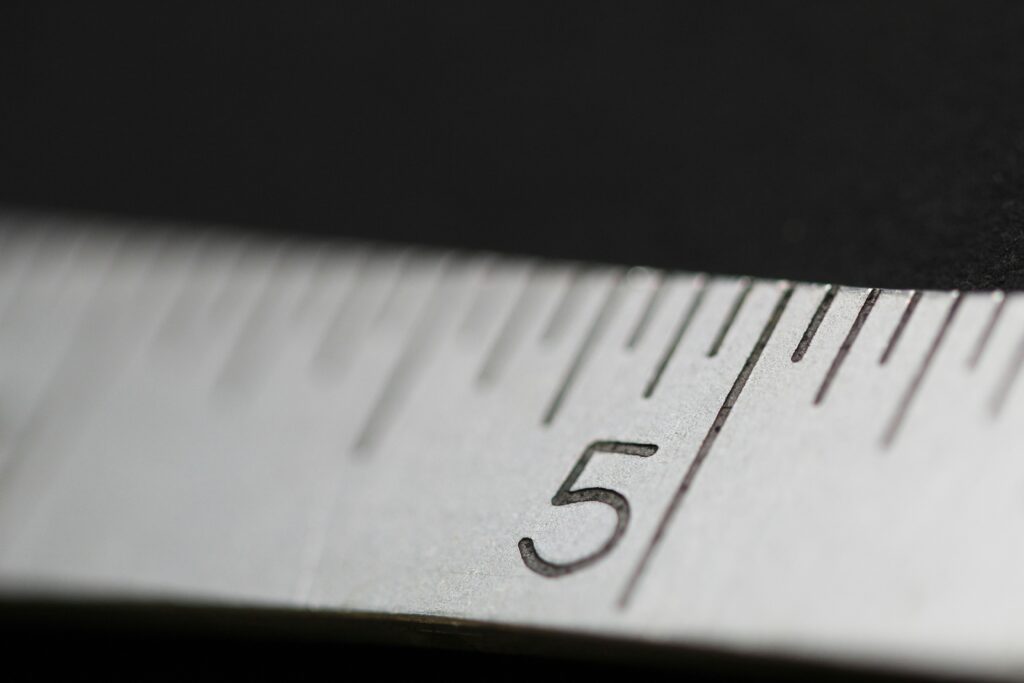
Your biggest culture shock will probably come in the form of measurements. All of Europe uses the metric system, even the UK, where the miles, feet and inches are still widely used. While it’s easy enough to convert measurements, it’s also easy to overlook one here and there – a yard for a metre, for example, which could throw out the whole stand. Hopefully your stand designer and builder will be well aware of it. Your power requirements will be different too. European power runs at 220–240V / 50Hz vs the US 110V / 60Hz standard, so all equipment needs to be compatible or adapted.
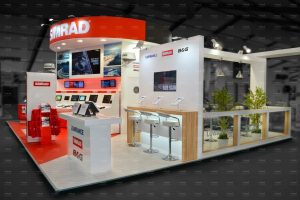
Space-only (bare floor) is the norm at major European shows, rather than shell schemes; you are usually expected to build a complete stand, not just decorate a shell. European stands (particularly in Germany) tend to be highly designed and architectural; a pop-up banner display that might be acceptable at a smaller US show will look out of place at a major European exhibition. Obviously, there are plenty of sophisticated stands in the US, but it depends what kind of show you’re used to. It’s generally worth the investment if you want to stand out.
Freight and shipping are clearly going to be big issues. Allow significantly more lead time than you would domestically. We’d strongly recommend using a specialist international exhibition freight forwarder.
There’s not enough space to go into too much detail here, but here are the main legal and financial rules you’ll need to spend some time researching.
You’ll probably find modern-day European cities are culturally similar to American cities, and people at trade fairs are usually as open and welcoming as anyone around the world. People from the US are usually given plenty of respect, so it’s unlikely there will be issues there.
European shows often have strict build and breakdown schedules, and there can be penalties for overrunning. This is not like loading out of a US convention centre, which is usually a bit more relaxed. Part of that might be down to union and contractor rules, however – it’s less of an issue than in the US. That said, venues do usually have official contractors for certain services (electrics, rigging and cleaning), so check the exhibitor documentation carefully. We would always recommend hiring a local exhibition manager or European agency who knows the venue, the contractors and the culture.
European exhibiting costs are typically higher than equivalent US shows, and this is particularly noticeable in Germany and Switzerland. Costs that catch US exhibitors off guard include stand build quality expectations, on-site services, hotel prices during major shows, staff travel and subsistence, and interpreter or translation costs. Things generally tend to cost more in Europe than you’re used to back home.
Don’t forget how currency fluctuation between US dollars and euros, GB pounds, Swiss francs, Danish krone etc. can affect budgets, so you might want to consider fixing rates in advance where possible. All in all, it’s worth adding 15–20% to your budget as a contingency.
Despite all the paperwork and costs, remember that Europe is a highly developed, wealthy continent, home to 750 million people, of whom about 450 million live within the EU. The US is already doing hundreds of billions of dollars’ worth of business every year with European governments, businesses and individuals, so any friction is clearly well worth it. We’re looking forward to welcoming you over!