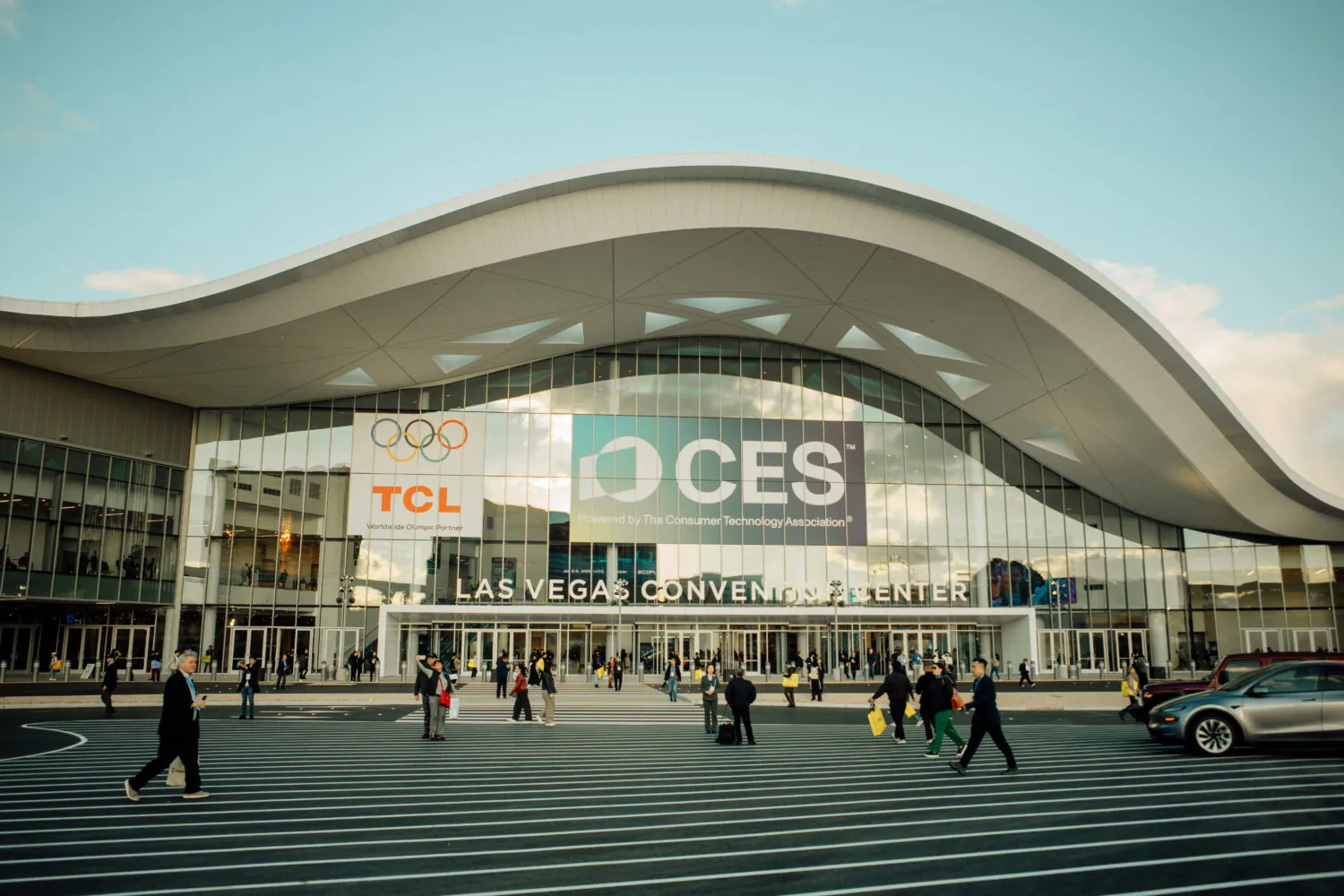
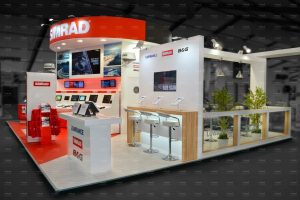
It often makes sense to get a foothold in your target nations by becoming an exhibitor at one of the trade fairs or exhibitions within your sector. It’s a relatively inexpensive way of gauging interest, talking to industry insiders, building up a contact list and demonstrating your products and services, without fully committing to setting up a more solid presence there.
If you have already decided to establish an overseas arm, exhibiting is the perfect way to drum up business with the added benefit of already serving the territory, making you an option for customers in the here and now, not some hypothetical future. In B2B, it’s even more important, as companies like to make strategic decisions long into the future when it comes to partners, suppliers and clients.
So assuming that you’ve decided to exhibit abroad, you need to decide how the logistics of setting up your stand will work. Do you ship your existing stand all over the world? Or do you seek out stand builders who are local to the venues you’re showing at?
In this article, we’ll weigh up the pros and cons of both approaches, then look at the characteristics of an overseas stand builder that you should be looking for, as well as the practical aspects you need to take into consideration.
Pros and cons of having a global exhibition partner
The case for choosing an overseas partner closer to the exhibitions is pretty strong, but there are a few drawbacks that are worth considering.
The first benefit is the most obvious – there’s no need to go through all the costs and paperwork of shipping your stand abroad. A large stand can be pretty heavy and sizable even when folded down, so it will need specialist shipping, which certainly isn’t cheap. Added to that is the fact that you’ll need specific paperwork to temporarily import your stand (known as an ATA Carnet), which isn’t massively complicated, but it’s just one more thing to worry about.
An important benefit is that a good local builder will already know the venue rules and standards, from safety and union rules to voltage, access and parking. If it all goes to plan, you’ll just have to turn up, assemble your stand and get networking because the builder will have covered everything.
And what if something doesn’t quite go to plan? A component might break or fail, or there could have been a slight miscalculation (which can be either party’s fault) that only reveals itself when you’re setting up. It’s much more likely to get fixed quickly if the builder is local than trying to ship things from overseas or quickly find a local partner.
If you’re looking for a designer as well as a builder, a local stand business will have a better idea about cultural tastes, as well as the fashions and trends of the local scene, which could be quite different to what passes in your home territory.
That’s not to say there aren’t potential drawbacks, of course. The main one is that the build will be taking place potentially thousands of miles away, and although you can fly over to check on progress, it’s clearly not something you can do weekly. If reality starts deviating from the plans, it might not be spotted early. If the builder speaks a different language than you, the chances of miscommunication are heightened. And working across vastly different time zones can also prove troublesome, as there are usually only narrow windows for direct face-to-face communication.
We’d say that the benefits do outweigh the drawbacks, however. If you’re aware of the pitfalls before you start the project, it gives both of you the opportunity to come up with strategies to avoid them.
Finding the right partner
As with many business decisions, choosing an overseas partner isn’t a spur-of-the-moment decision. You can start by looking for word of mouth recommendations from people you know in your industry. Some of your own staff might have experience working with stand builders in previous employment, so do ask around.
Next, try looking in established directories, like those run by UFI (The Global Association of the Exhibition Industry) or the EDPA (Experiential Designers & Producers Association). You can often drill down by nation and region to find one that’s local to the venue.
Once you get a few potential hits, start to research them. Find out if they have worked with businesses from your country before – if they have, it’s a good sign that there will be smooth communication and legal adherence. An established stand designer and builder will have an extensive portfolio of previous work, and quotes from satisfied customers that can be cross-referenced to make sure they’re genuine.
They should also display their credentials and memberships of recognised industry bodies, such as those mentioned above. This is a good way of assessing their credibility and should go a long way to ensuring you get a well constructed stand that fits with the local culture.
Some red flags to watch for include vague pricing, no portfolio and no references. These are not necessarily deal-breakers, of course. In industries dealing with bespoke products, prices aren’t always easy to determine from early sketches, although you should at least be able to get a ball park figure once you’ve told them your plans.
Portfolios and references are signs that they are established, but every company starts somewhere – Steve Jobs and Steve Wozniak left Hewlett-Packard and Atari respectively to take a punt on a little start-up called Apple in the 1970s, for example. Still, employ your usual due diligence to seek out other credentials, and try to arrange an in-person or virtual meeting. It’s riskier to go with an unknown builder, but you might be able to get a good deal – just make sure you follow their progress closely. More on that in the next section.
Planning the stand and monitoring progress
If you have decided to go with an established stand builder, it’s vital that you start early – and we’re talking a year or more in advance of the event. Not only will they probably have full order books, but there’s also the fact that dealing with an overseas supplier will necessarily take longer, as individual steps tend to be slower to complete. A less established builder might fit you in with less time, but that comes with its own risks, as we pointed out above.
As with a local builder, ask for full 3D mockups and photorealistic renderings right from the start. If you’re supplying them with complete designs, ensure that they have passed it, and have explained any changes they have been forced to make, for example for technical or local compliance reasons.
Make sure that you find a builder that is willing to keep you posted throughout the whole process, from planning to delivery. It might be a bit more work when they are remote, but it’s worth every second to be aware of how things are going – and if they’re deviating from the planned route. Weekly video updates are perfect, especially if they can provide a live walkthrough, where you can see the stand and ask questions on the fly. If you can get a member of your team, or a trusted local contact, to inspect the stand before it’s shipped, even better. Leave time for any last-minute modifications.
Legal, regulatory and compliance considerations
Your overseas builder should be much better at sticking to the local rules than you could ever be, and that’s one compelling reason to pick one in the first place. Your builder should be able to let you know all about things like:
- Venue-specific rules, such as height or weight restrictions and fire safety requirements
- Local or national health and safety regulations
- Electrical standards in the locality and at the venue
- Whether temporary structures need permits or engineering certificates, as is the case in some markets, especially for outdoor structures
- IP and branding – these should be yours, so ensure contracts are clear about who owns stand designs and any graphics
- Contracts and liability, i.e. who is responsible if the stand is damaged or delayed
- Insurance – find out what is covered by the builder, and what you’ll need to provide yourself.
Keeping costs down
Having a stand builder that’s local to the exhibition venue should automatically keep costs down compared to shipping your stand over. Not only will there be less physical movement of goods, but they will probably also have deals and accounts with local suppliers that allow them to source parts and materials at a discount.
A good way of keeping costs down is to create a stand with a modular design. That’s where you can attach spaces to each other in a number of configurations, rather than having one engineered design that has to be the same at all times. It means you can do shows of different sizes and in different spaces without requiring a rebuild every time, and it’s easier to sell later.
There are cases where simply renting a stand will work out cheaper, especially for a one-off exhibition. It might not have your own personal stamp on it, but it’s a good way to dip your toe in the water of a new market.
After the show is over
Have you considered what will happen to your stand after the show is finished? As something you own, it’s a potential asset to the company, but it could become a liability if you don’t plan ahead.
If you are sure that this will be your only show in that territory, you really have two viable options: have it shipped back to your home nation, or somehow dispose of it. Shipping it back and using it might be useful, especially for a highly bespoke stand that you would have copied anyway. You’ll still have saved money by not having to ship it twice, there and back.
If you don’t plan to bring it back, ask the builder if they have a buy-back policy. They might agree to pay a certain amount for it, as there will no doubt be a good deal of material that can be re-used on other projects, or sold. They could keep the stand as it is to sell or hire out, which might be something to take into consideration when you’re designing it. Another option is to donate it – there could be schools or charities that would be delighted to get a free stand, and it’s good PR for you.
If you are planning to exhibit there again, you’ll need to arrange storage. You might have to do this independently, but again, ask the builder if they have storage facilities – they might provide space at a small monthly cost.
Of course, you might not want to have the exact same stand year after year, so the builder might be happy to store it for free on the understanding that you’ll be a regular client to modify it between shows. Exhibitions will naturally cause wear and tear or damage, so ask about entering into a maintenance contract with them.
A host of benefits
We think that nine times out of ten, the benefits of getting your stand made local to the exhibition will outweigh the drawbacks, especially if you plan to exhibit there many times in the future. In some ways, the things to look out for are the same as they are for hiring a stand builder in your own country. But their local knowledge of legal requirements, venue stipulations and business practices are hard to pick up from across oceans, and it doesn’t take too many errors to cause a lot of headaches when you roll up to start the exhibition.
If you’re looking for a UK-based exhibition stand designer and fabricator, check out our portfolio to give you an idea of the quality and inspirational ideas that we can bring to your exhibitions. We’re always open to working with international clients, and we’ll be able to make sure you hit the ground running, whether you’re exhibiting in London, Manchester, Edinburgh, Cardiff or elsewhere in the UK.